Explainer
What Causes Skin Aging? Sun, Sleep, Smoking, Stress and Sugar
Ranked by the strength of the evidence, with one kind, doable change for each. No anti-aging panic.
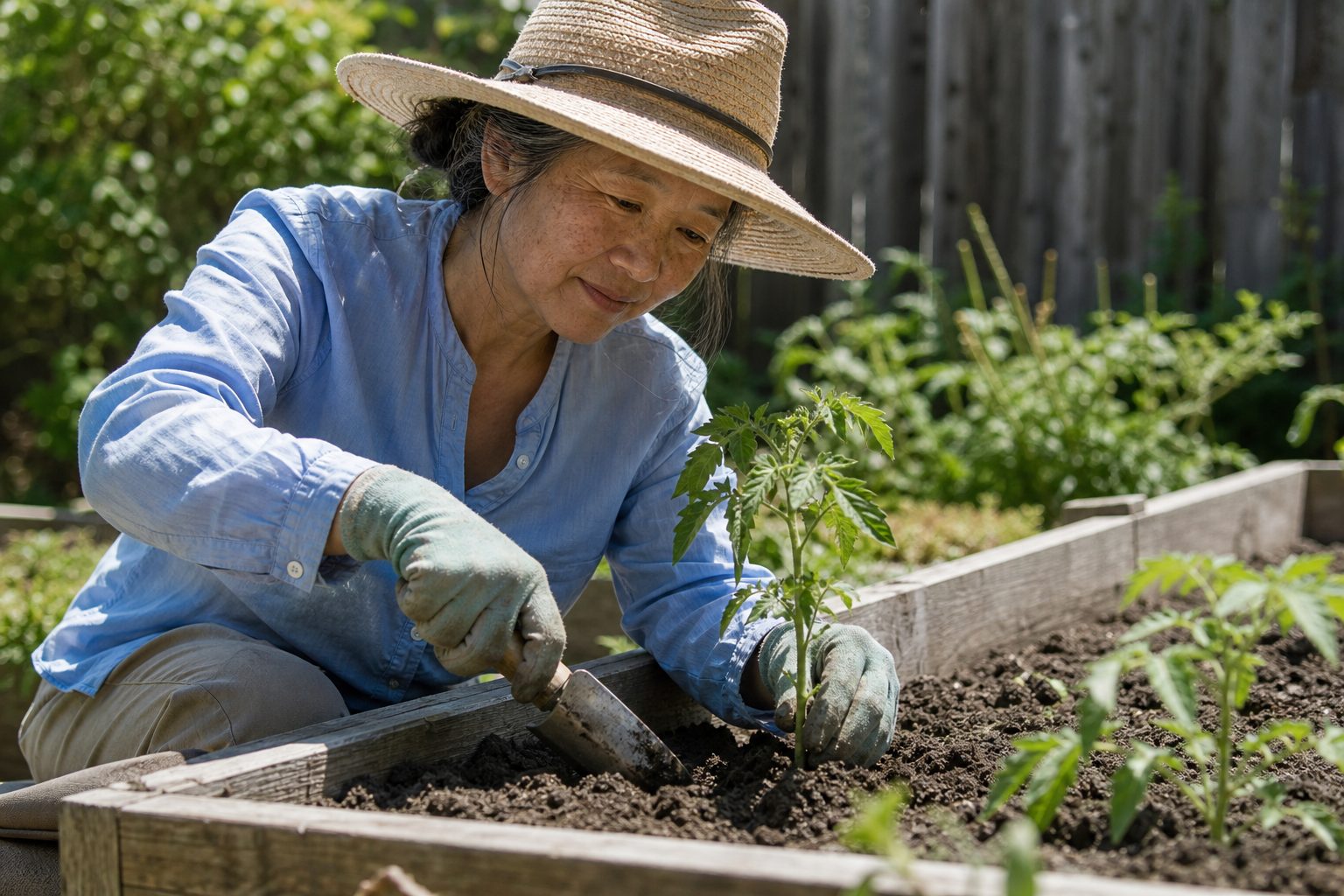
What causes skin aging comes down to two clocks running at once. One is intrinsic aging: the slow, built-in changes that come with time and your genes, which nobody gets to skip. The other is extrinsic aging, driven by what your skin meets every day, and that is the part you can influence. Of those everyday factors, ultraviolet (UV) light from the sun and tanning beds has the strongest evidence by a distance, followed by smoking. Sleep, stress and alcohol come next, with thinner evidence. Sugar and water sit at the bottom, and we will be honest about why.
What causes skin aging: intrinsic vs extrinsic
Dermatologists split skin aging into two kinds. The American Academy of Dermatology (AAD) puts it simply: natural aging can't be avoided, but our environment and lifestyle choices can make skin age before its time.
Intrinsic aging is the part written into your biology. Over the decades, skin slowly gets drier and less elastic, at a pace your genes largely set. It happens to everyone and needs no fixing: this is graceful aging.
Extrinsic aging is everything that piles on top: sunlight, smoke and the habits of an ordinary week. It tends to show up as deeper lines, uneven color and rougher texture sooner than age alone would bring them. The hopeful part is that extrinsic aging responds to what you do.
UV: the biggest factor you control
Photoaging is skin aging caused by UV light, and it is the best-studied part of the picture. It usually shows as lines around the eyes and forehead, uneven color and rougher, less springy skin. The World Health Organization lists premature skin aging, which it describes as a loss of skin elasticity at a young age, among the long-term effects of UV exposure, and it advises against artificial tanning devices. The AAD adds that every tan, whether from the sun or a tanning bed, comes from UV that speeds up how quickly skin ages.
The strongest evidence we have
Most skin-aging research can only show that two things tend to travel together. Sun protection is the exception. In a randomized trial in Nambour, Australia, 903 adults under 55 were assigned either to use broad-spectrum sunscreen every day or to keep using it whenever they chose. After four and a half years, the daily group showed no detectable increase in skin aging, and their aging was 24% less than the comparison group's, as graded by assessors who didn't know which group anyone was in. That is why sun protection tops every list, including this one.
One kind change
If you change one thing, make it this: a broad-spectrum sunscreen with SPF 30 or higher on uncovered skin every morning, the kind the AAD recommends (it also suggests water-resistant). Add shade, a wide-brimmed hat and sunglasses when the sun is strong (the AAD notes sunglasses also cut down on squint lines). Outdoors, reapply about every two hours and right after swimming or sweating, and skip tanning beds entirely. If you like a bit of color, the AAD points to self-tanner as the UV-free way to get it.
Smoking and vaping
After UV, smoking has the clearest link to skin aging. The AAD says smoking greatly speeds up how quickly skin ages, and that it causes wrinkles and a dull, sallow complexion.
Vaping is newer, and honestly, the research hasn't caught up. There is very little data on e-cigarettes and skin aging so far, so nobody can tell you yet whether vaping ages skin the way cigarettes do. “Not known” isn't the same as “fine,” though.
The kind change: if you smoke or vape and want to cut down, you don't have to work it out alone. A doctor, pharmacist or local stop-smoking service can talk you through the options. Your skin is one more reason on a list that is probably long already.
Sleep, stress and alcohol
The evidence for these three is real but thinner: smaller studies, surveys and plausible mechanisms rather than long trials.
Sleep
In a study of 60 women aged 30 to 49, chronic poor sleepers (five hours or less a night, with poor sleep quality) had higher scores for signs of intrinsic aging than good sleepers who got seven to nine hours. The good sleepers' skin barrier also recovered about 30% better after a mild tape-stripping test, and their skin bounced back faster from UV redness. The study is small and observational, included only white women and was funded by a cosmetics company, so hold it lightly. Still, it points the same way as common sense: rest is skincare too.
The kind change is to protect a regular sleep window before you buy anything new. If sleep is a real struggle, a doctor is the right person to talk to.
Stress
Stress is the hardest one to pin down. A review in Dermatology Online Journal describes how long-running stress could plausibly affect skin through stress hormones, immune changes and oxidative damage, while noting there is no conclusive evidence directly linking psychological stress to skin aging. So it goes in the “plausible, not proven” column. The kind change is one you would want anyway: a small daily habit that helps you wind down, and professional support if stress feels heavy.
Alcohol
The AAD describes alcohol as rough on skin: it dehydrates skin and damages it over time. Direct research on alcohol and visible aging is limited, and it is hard to separate alcohol from what often comes with it, like late nights and short sleep. The kind change is fewer drinks and more alcohol-free days, and talking to a professional if cutting back feels hard.
Sugar and hydration: the evidence is weaker, and we say so
Sugar
The AAD notes that findings from some studies suggest a diet heavy in sugar and other refined carbohydrates can speed up aging, while plenty of fresh fruit and vegetables may help. The usual explanation is glycation: sugar binds to collagen and elastin, the proteins that keep skin firm and springy, and makes them stiffer and harder to repair. It is a sensible mechanism, but good evidence on how much an ordinary diet changes how your face looks over the years is thin. Eat well for a hundred other reasons, and don't let a slice of cake feel like a skin emergency.
Water
“Drink more water” may be the most repeated skin tip online, and it has the least behind it. A systematic review found only six studies that met its criteria and called the overall evidence weak. Extra water may slightly raise skin hydration, mostly in people who drank little to begin with, but the authors said more research is needed even to know whether it reduces dry skin, let alone wrinkles. Drink to thirst, and if your skin feels dry, a daily moisturizer is the tool the AAD points to.
The summary table: habits ranked by evidence
The whole picture, strongest evidence first. “Strong” means a randomized trial or consistent guidance from major bodies; “limited” and “weak” mean smaller or indirect research.
| Factor | What it can do to skin | Strength of evidence | One kind change |
|---|---|---|---|
| UV from sun and tanning beds | Lines, uneven color, rougher and less elastic skin | Strong: a randomized sunscreen trial, plus WHO and AAD guidance | Broad-spectrum SPF 30+ every morning; shade, hat, sunglasses; no tanning beds |
| Smoking | Wrinkles and a dull, sallow complexion | Strong: the AAD says it greatly speeds up skin aging | Talk to a professional about cutting down |
| Vaping | Not yet known for aging | Too early to say: very little data | The same conversation with a professional |
| Poor sleep | More signs of intrinsic aging, slower barrier recovery | Limited: one small observational study | A regular sleep window |
| Alcohol | Dehydrated skin, damage over time | Limited: dermatologist advice, little direct research | Fewer drinks, more alcohol-free days |
| Stress | Possible effects through stress hormones and inflammation | Limited: plausible mechanisms, no conclusive link | One daily wind-down habit |
| High sugar | Stiffer collagen through glycation (proposed) | Weaker: a mechanism plus a few studies | Eat well, without skin panic |
| Low water intake | Slightly less skin hydration in people who drink little | Weak: a review found only six studies | Drink to thirst; moisturize if skin feels dry |
Five kind changes, strongest evidence first
- Broad-spectrum SPF 30+ on uncovered skin every morning.
- Shade, a hat and sunglasses in strong sun, and no tanning beds.
- If you smoke or vape, one talk with a doctor or pharmacist about cutting down.
- A regular sleep window, protected most nights.
- Fewer drinks, a daily wind-down habit, and meals without skin panic.
Seeing which habits show up for you
Knowing which of these factors is actually in your week is the question FutureSkin, our app launching soon on iPhone and Android, is built around.
You answer about 18 quick questions on your routine and lifestyle, which takes about two minutes: how often you wear SPF 30+, whether you reapply, how long you spend in the sun, tanning beds, smoking or vaping, sleep, alcohol, sugar, stress and more. FutureSkin turns those answers into a free 0–100 routine score, weighted toward the habits with the strongest evidence. Sun protection is worth 30 of the 100 points, and how often you wear SPF 30+ is worth up to 18 of those on its own, more than any other answer. Smoking is worth up to 10 points of the 30-point lifestyle category. The score is calculated from your answers by a fixed formula, not guessed by AI, so the same answers always give the same number. It is a number to grow, not a grade to fear.
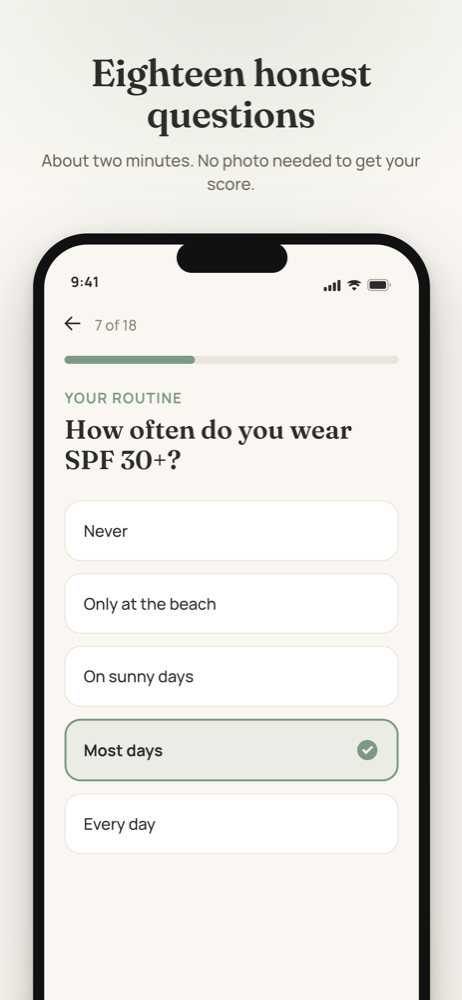
Specific answers also raise flags, such as no sun protection, smoker, sleep-deprived, tanning, high sugar or high stress. Those flags shape your free plan: recommendations ranked by impact, each with a note on why it helps and chips for effort and cost. The plan names habits and product categories (think “a broad-spectrum SPF 30+ every morning”), never brands, and it doesn't judge ingredients or specific products.
With Pro, one private selfie becomes two AI portraits of your face ten years from now: one on your current routine and one on an improved routine. You always get both, and a slider lets you compare them with today. The current-routine portrait draws on descriptions tied to your flags, so a no-sun-protection flag leans toward sun-related changes, while the improved one shows graceful aging. They are a motivational simulation, not a medical prediction, and they can vary from run to run. Portraits are for adults 18 and over.
Your score and plan are free for up to 10 analyses a month, with an email sign-in code instead of a password. Pro is $9.99 a month or $29.99 a year, with a free trial when your store account is eligible, and includes up to 30 portrait scans a month.
A few honest limits. FutureSkin doesn't scan or analyze your skin: the score comes only from your answers, and the selfie is used only to create the portraits. It can't diagnose anything, and it is no substitute for a dermatologist. If you are wondering how this compares with aging filters and skin scanners, we explain the three kinds in face aging apps compared.
The short version
Your genes set the pace of intrinsic aging, and that part deserves no worry. Of the part you can steer, daily sun protection and not smoking carry the most weight. Start there, go easy on yourself about the rest, and let your skin keep the good receipts for the next ten years.
Frequently asked questions
What is the main cause of skin aging?
Does sunscreen really prevent wrinkles?
Does lack of sleep cause wrinkles?
Does sugar age your skin?
Is it too late to start protecting my skin?
Keep reading
More from the FutureSkin blog
Guide
Is My Skincare Routine Working? How to Tell, Short and Long Term
Skincare has a feedback loop about ten years long. Audit the habits rather than the mirror, and keep a checkpoint you can repeat.

Comparison
Face Aging Apps Compared: Filters, Skin Scanners and Simulations
Most aging apps age everyone the same way for a laugh, or score your skin to sell you something. What a routine-based simulation does differently, and what to ask before uploading a selfie.